


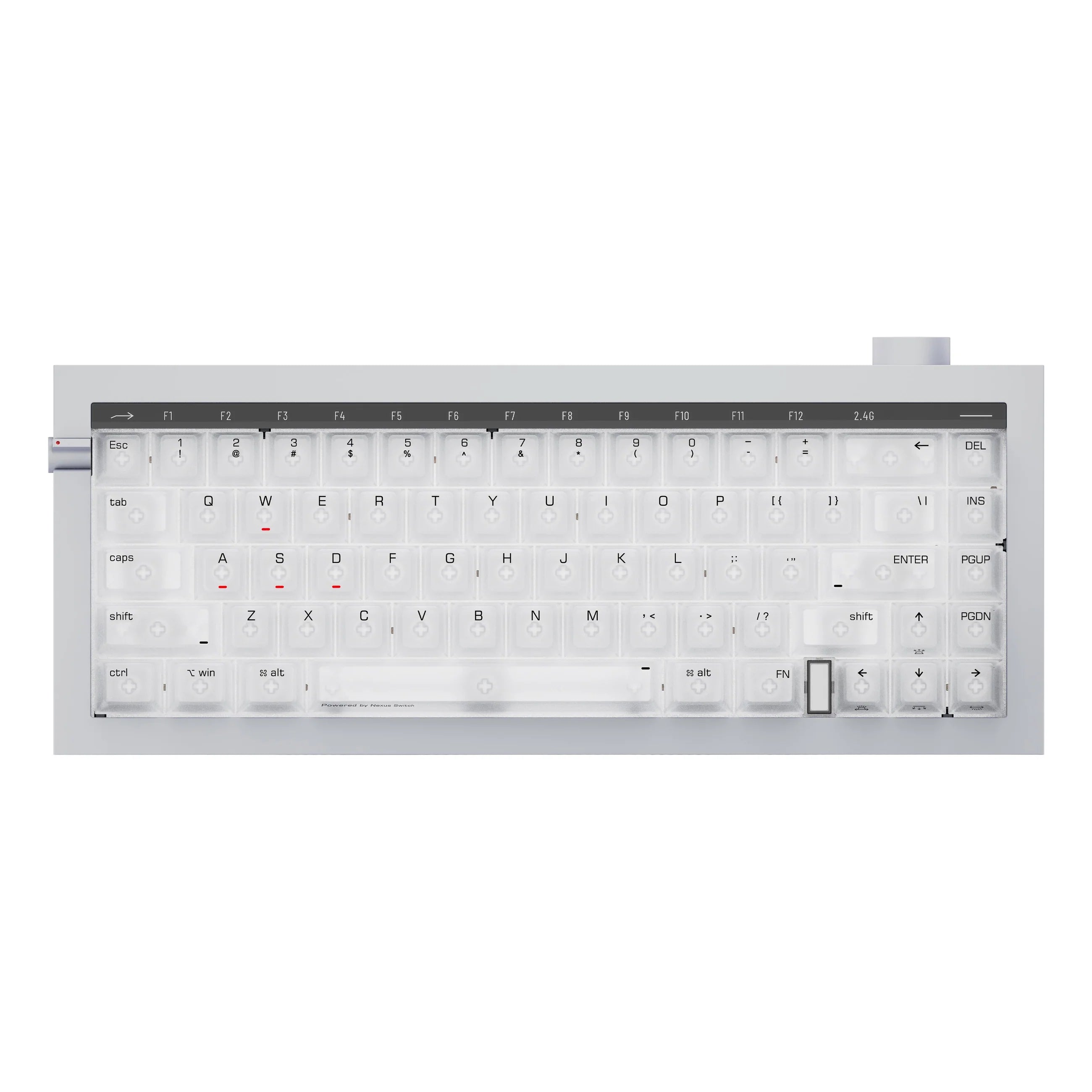
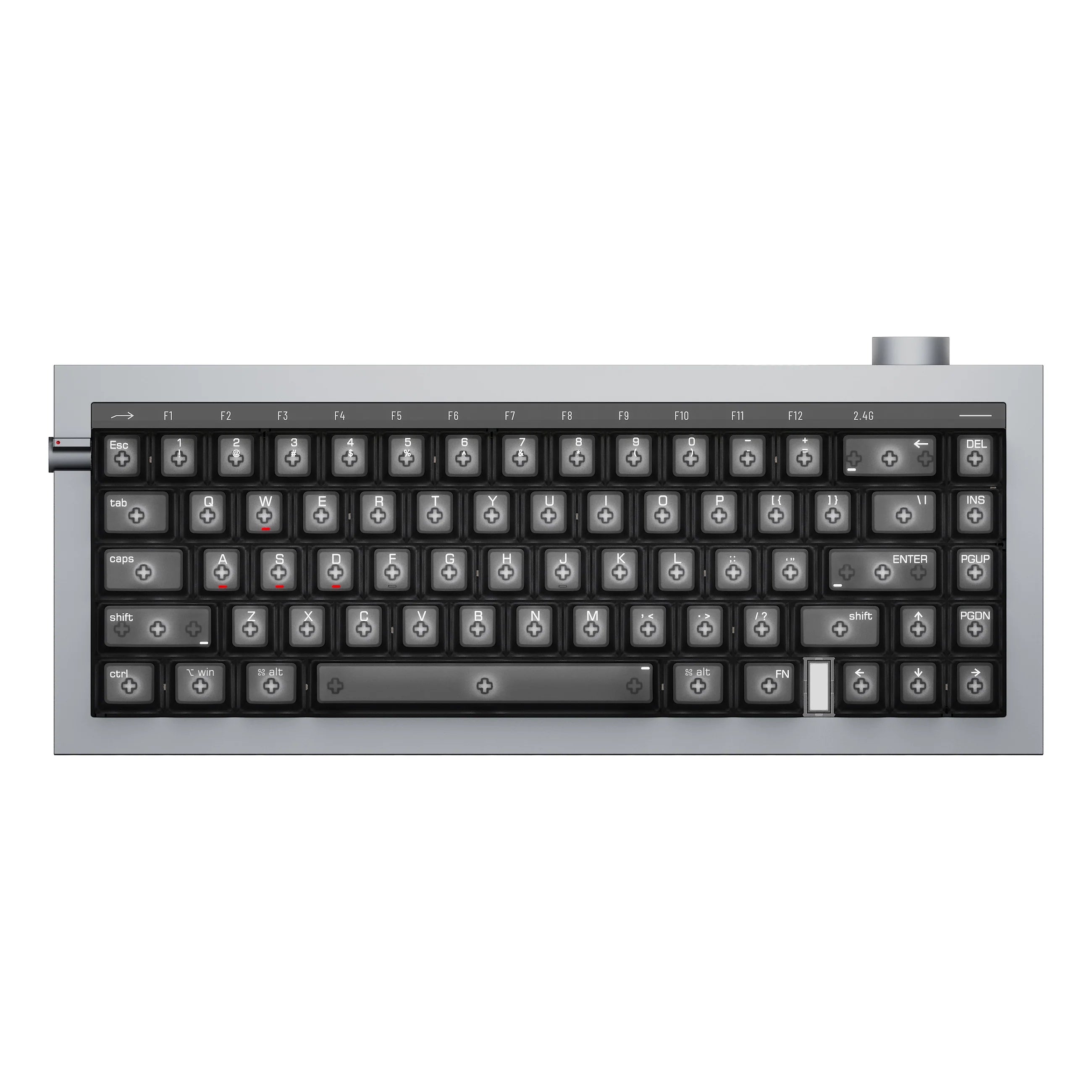
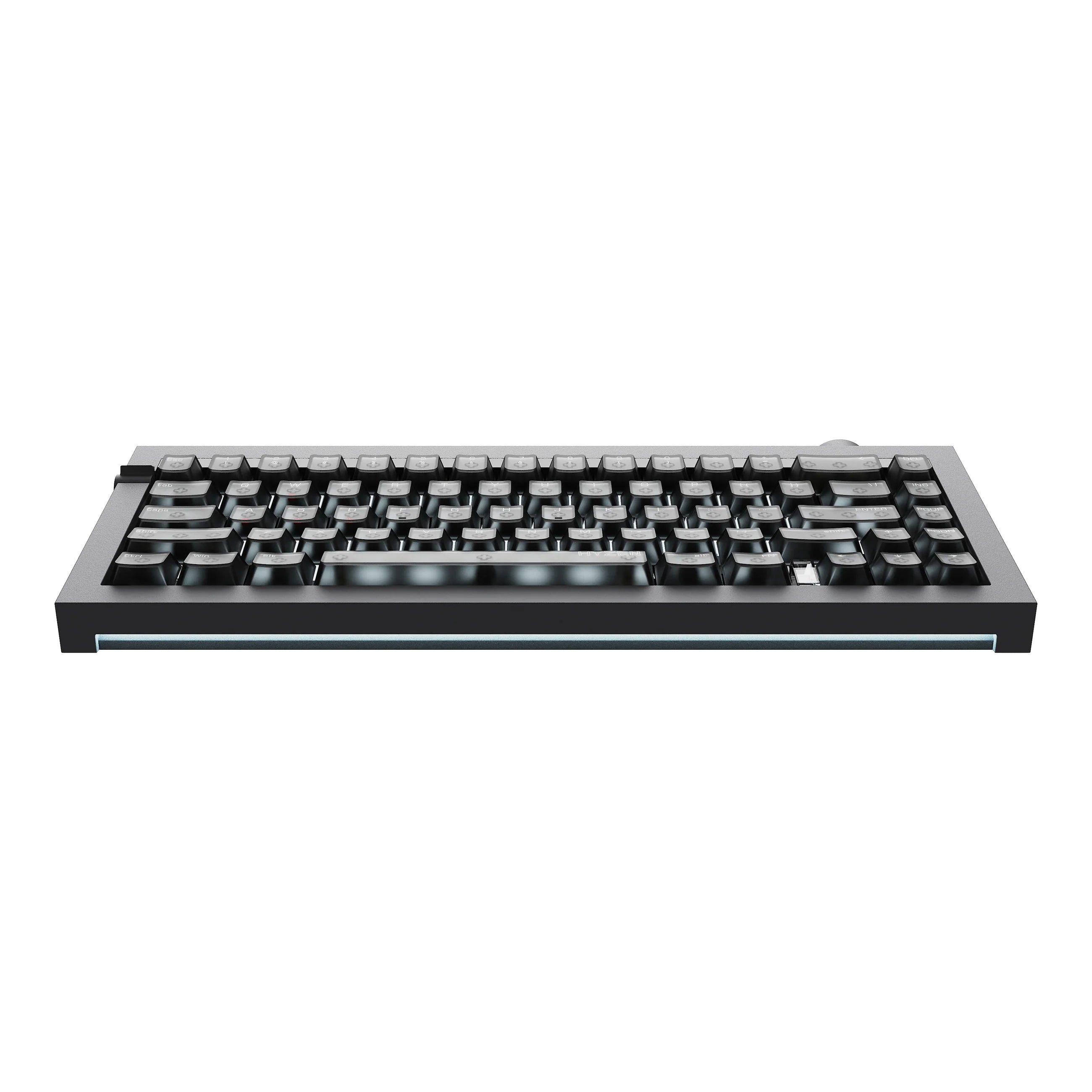


Hyzen67 — the world's first mechanical magnetic keyboard.
A CNC aluminum 65% running true Magnetic Switch analog travel with 0.01 mm Rapid Trigger — then flipping to real mechanical actuation on a keystroke. All the control you expect from a Hall Effect switch board, in a case built like a custom.
Minimalist design, maximum impact.
Hyzen67 doesn't look like a gaming board. There's no aggressive angle, no fake vent, no logo shouting across the top case. Just straight lines, tight tolerances and a slab of metal that feels heavier than it has any right to.
The whole thing is carved from a single block of premium aluminum — CNC-milled rather than assembled from stamped halves, which is what gives the edges their sharpness and the deck its dead-solid feel under load.


One block of aluminum. No seams to rattle.
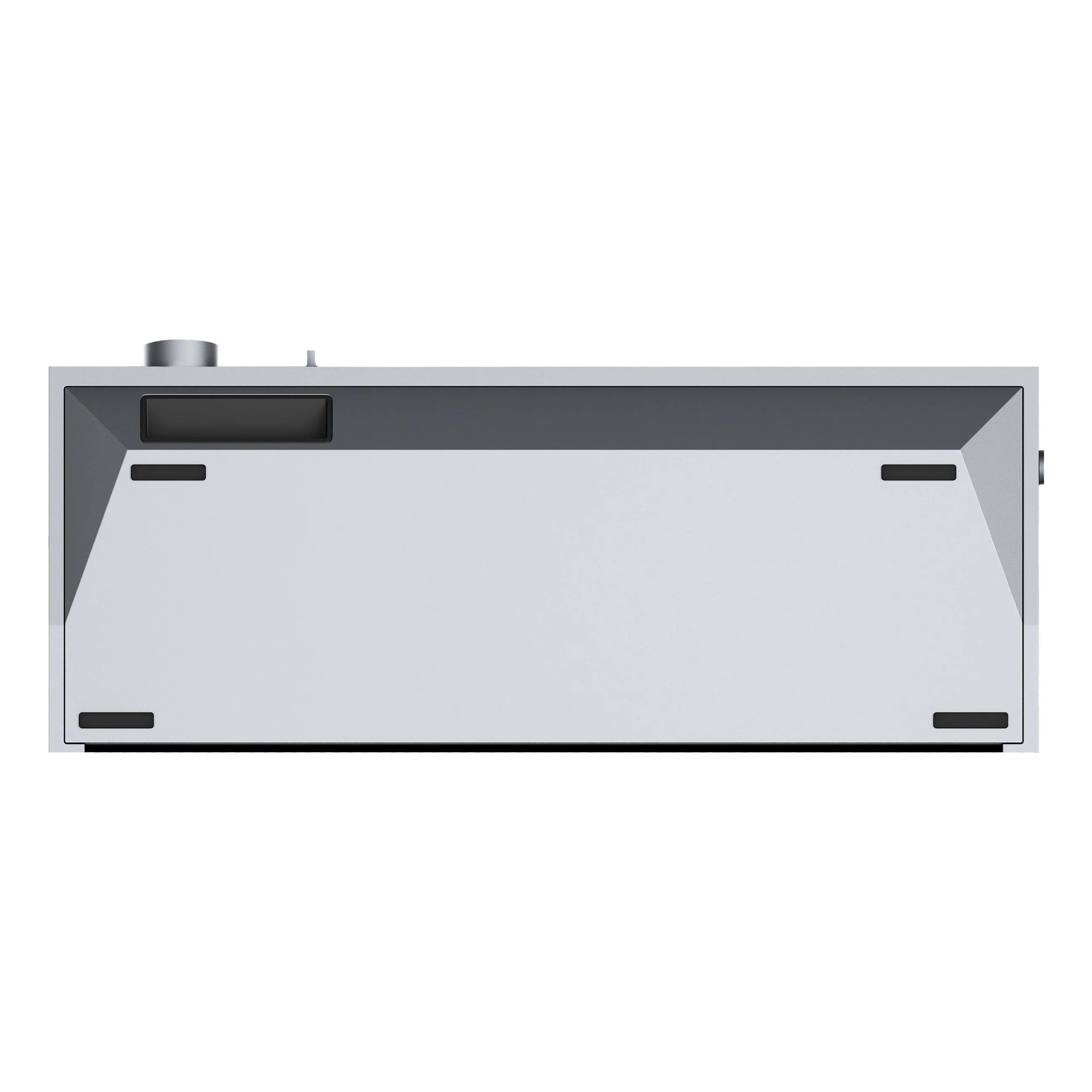
A unibody shell removes the joins that normally hum and resonate on a metal board. Combined with the gasket mount and five-layer damping inside, the case has nowhere to ring — which is why Hyzen67 sounds full rather than hollow.
Architectural precision, built into the case.
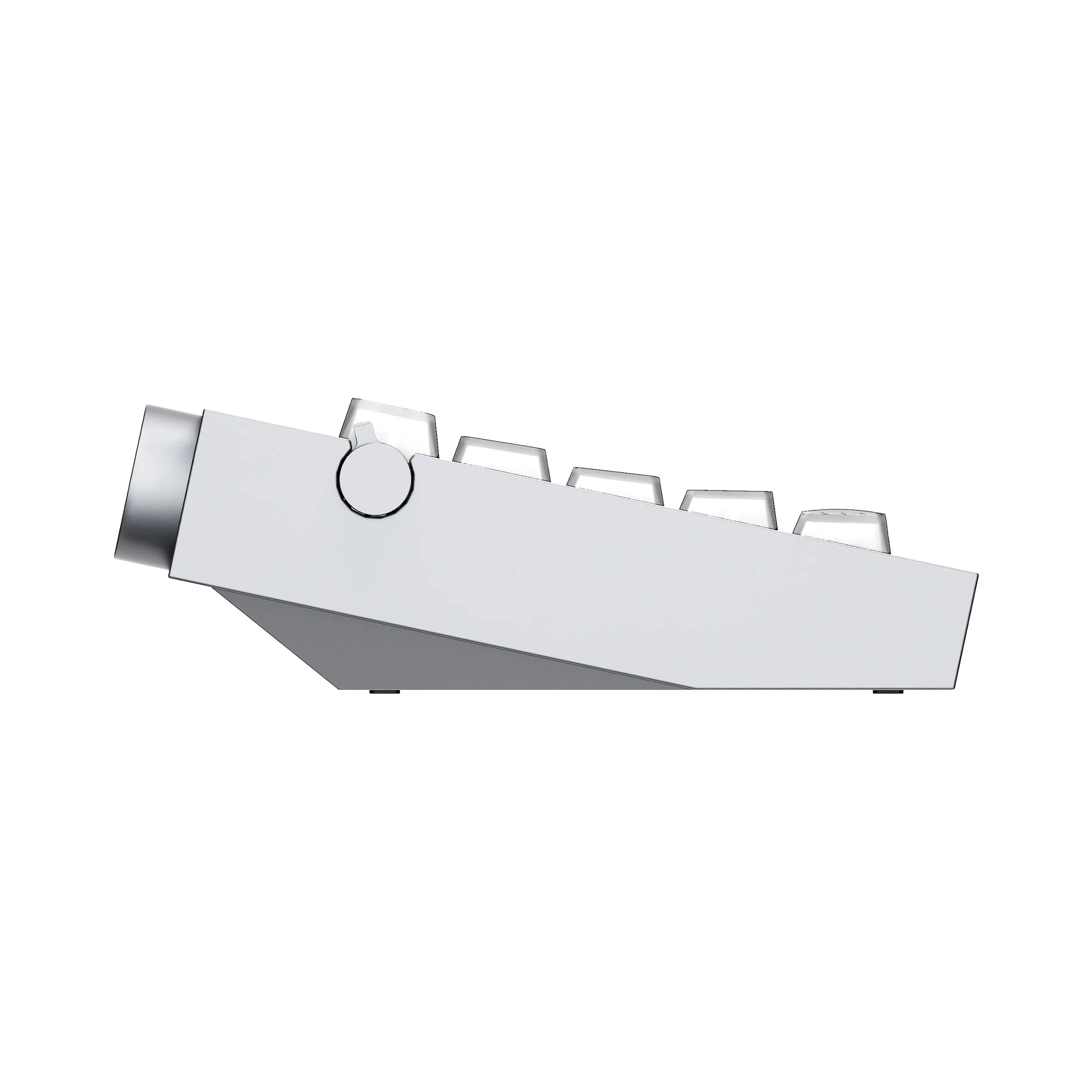
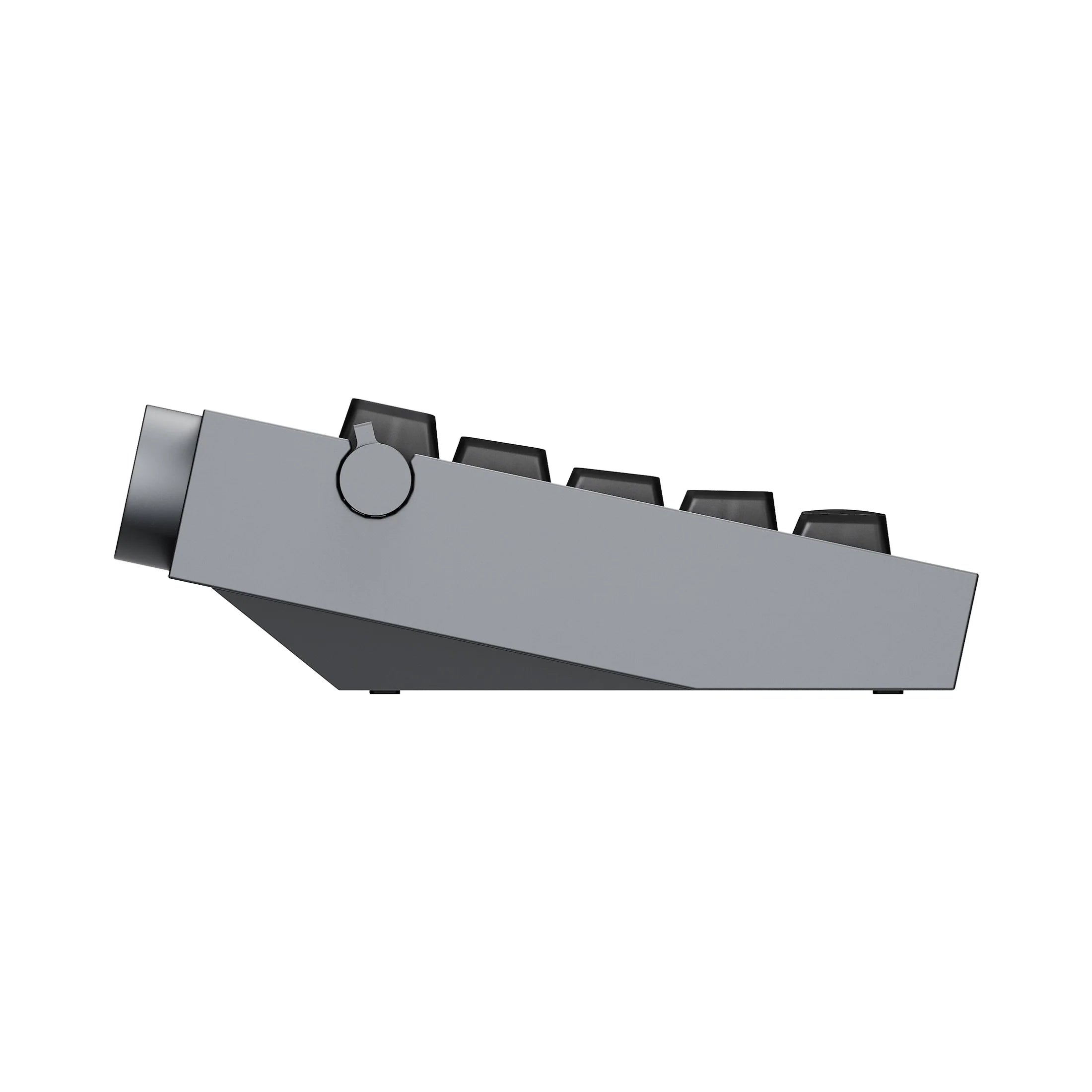
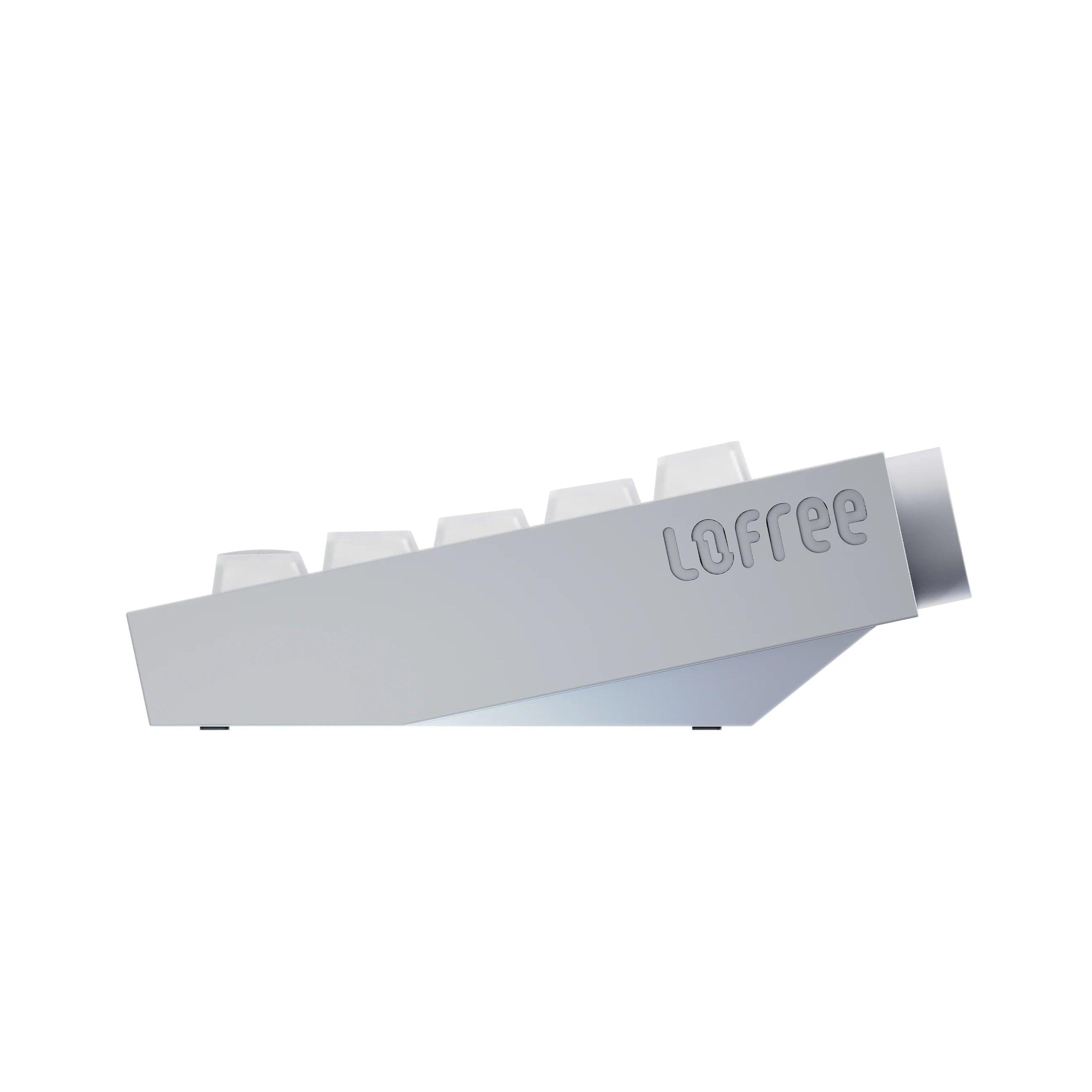
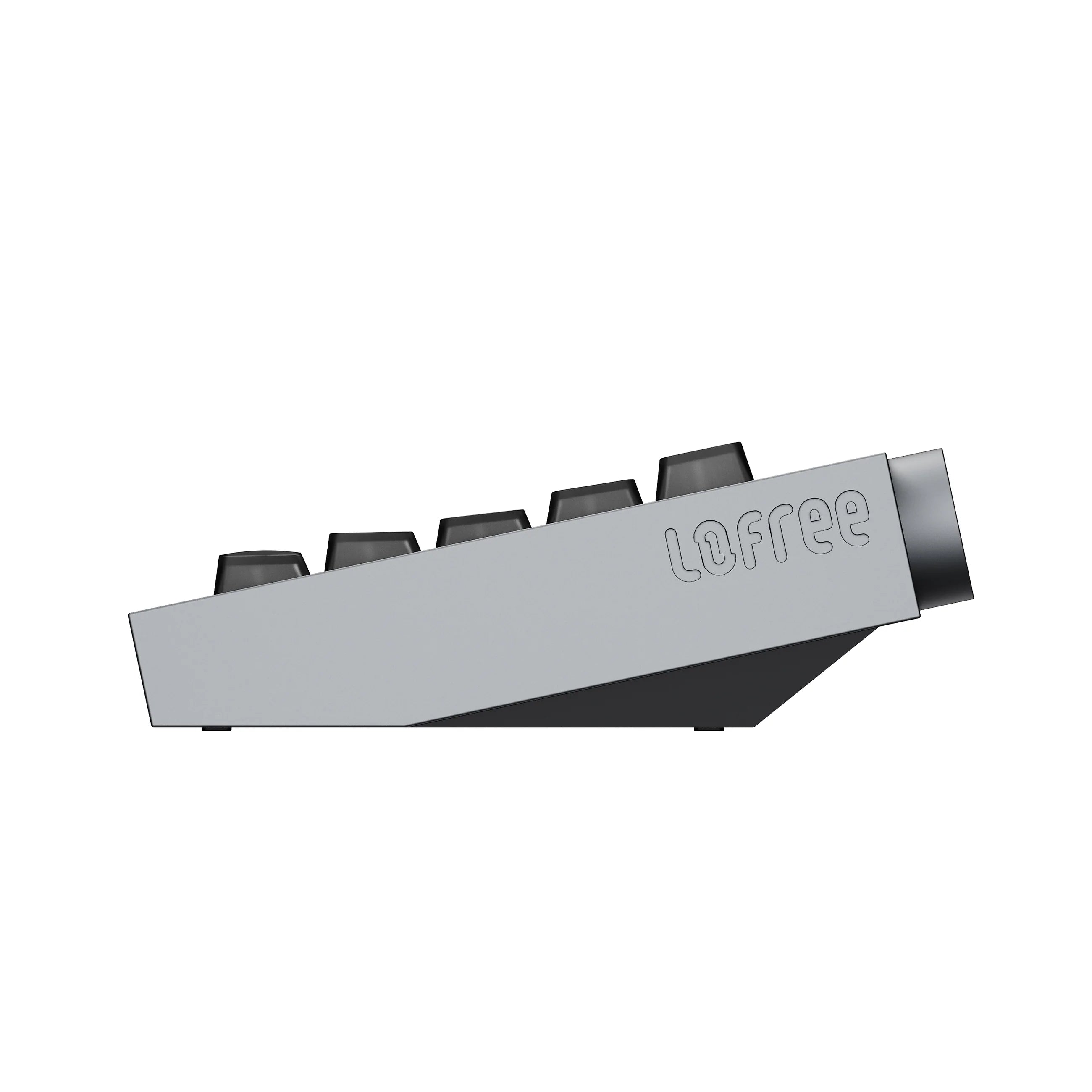
The 12° tilt is machined into the body — no flip-out feet, nothing to collapse mid-session. The wedge profile reads as pure geometry from the side, and it puts your wrists where they should be for long sessions without a riser.


Two knobs. Everything under your fingers.
One knob handles Hi-Fi volume with a weighted, notched turn. The second handles mode and function switching, so you're not hunting for a Fn layer to change connection or flip the F-row. Physical controls, physical feedback — the way a metal board should work.
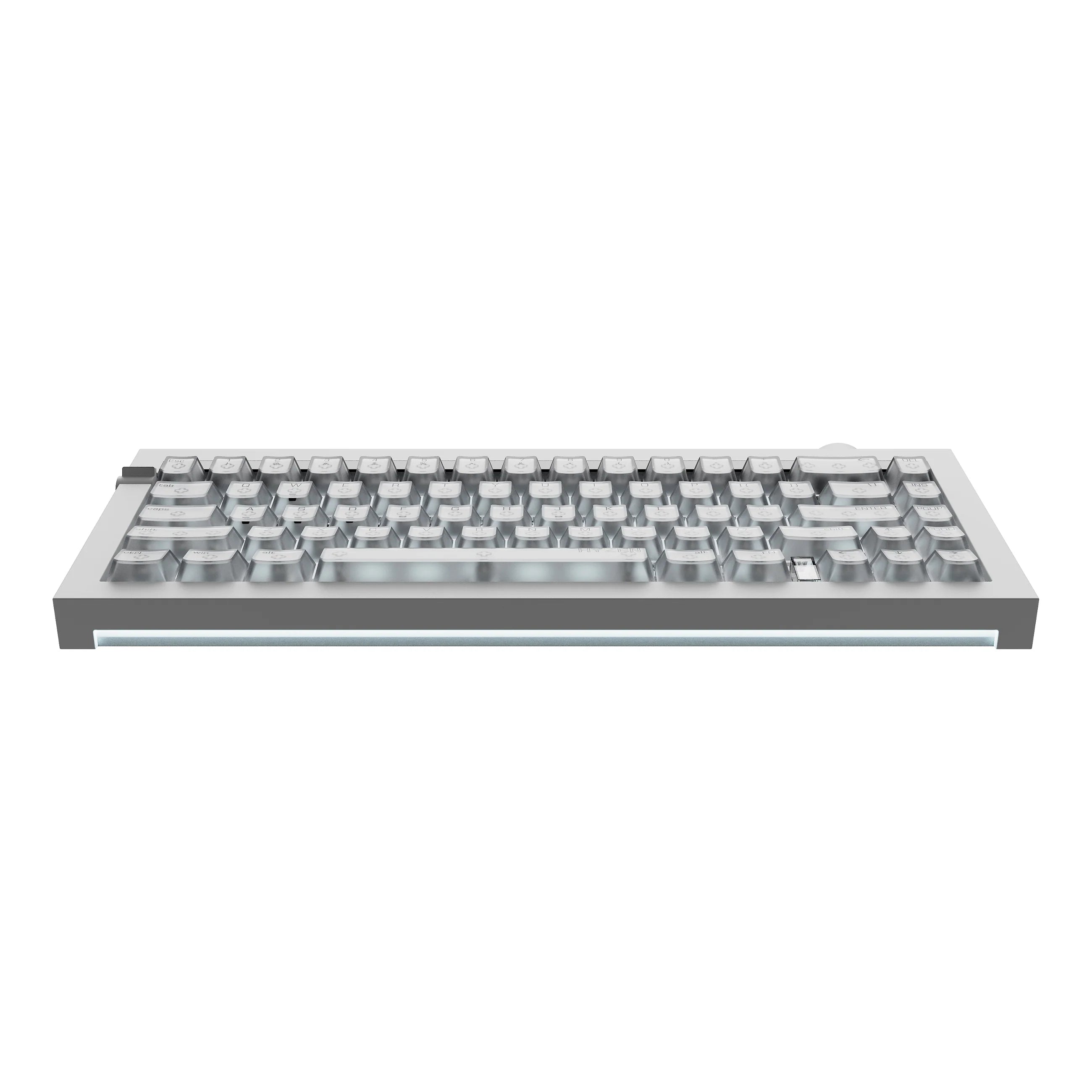
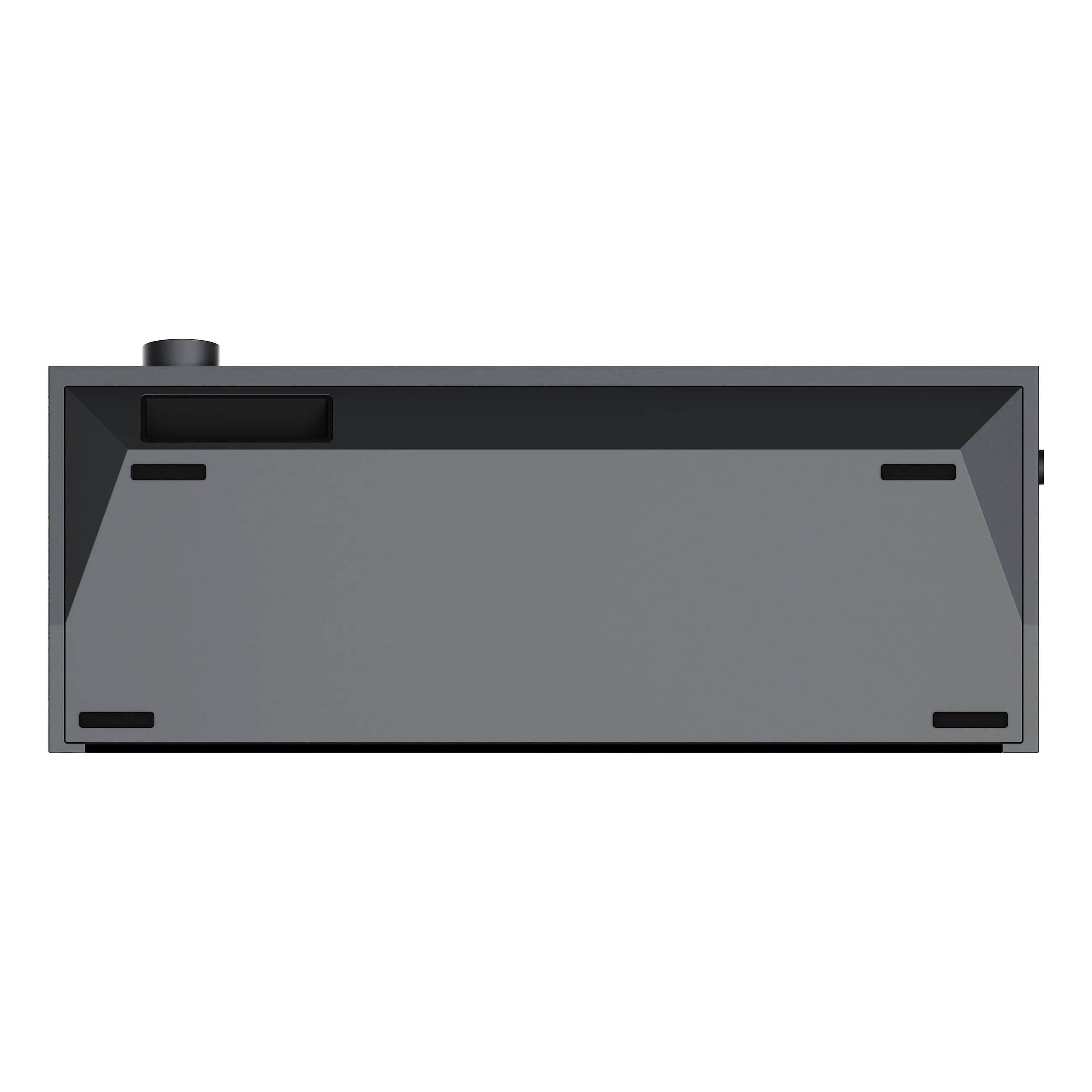
A full-width light bar in the base.
Beyond per-key ARGB, a light bar runs the entire width of the underside and washes the desk beneath the board. It reads as ambient glow rather than RGB spillage — and it doubles as a status indicator for connection mode and battery.

Dual tones, one masterpiece.
Both finishes ship with a matching palm rest in the same anodised tone, so the desk setup reads as one object instead of two.
Silver
Cool, bright anodising with the raw machined edges left visible. Pairs with light desks and translucent keycaps for a clean, technical look.
Space Gray
Deep graphite with a low sheen. Lets the ARGB and the base light bar carry the colour while the case stays quiet.

Magnetic Switch speed meets mechanical soul.
The Lofree × Kailh Nexus is a hybrid: a magnetic switch stack with metal contacts built in. That means it can behave as an analog Magnetic Switch — continuous, adjustable, 0.01 mm resolution — or as a conventional mechanical switch with a fixed actuation point and a real contact click.
Where a typical Hall Effect switch keyboard reads the magnet with a Hall sensor, Nexus uses TMR (Tunneling Magnetoresistance) sensing — a more sensitive class of magnetic sensing, which is what makes the 0.01 mm step size usable rather than theoretical.


Two keyboards, one board.
Magnetic Mode for play — Rapid Trigger, adjustable actuation, DKS, SOCD. Mechanical Mode for work — a fixed, definite actuation point and the tactile confirmation you actually want when you're writing rather than fragging.
Switching is a single shortcut. And because the PCB is hot-swap, it accepts both magnetic and standard mechanical switches, so the board changes character as often as you like.
Nordic nRF54. 8000 Hz. 0.125 ms.
Hyzen67 runs a Nordic nRF54-series chipset — enough headroom for an 8000 Hz polling rate and roughly 0.125 ms of input latency. Every keypress is sampled eight times in the span a 1000 Hz board samples once.
Full NKRO across all connection modes, so nothing drops out mid-combo.


One command centre for the whole board.
Set per-key actuation depth, tune Rapid Trigger sensitivity, and build DKS (Dynamic Keystroke) and SOCD behaviours. Remap the layout, drive the ARGB, manage the F-row toggle — all of it in Lofree Hub.
8000 Hz without the cable.
The 2.4 GHz link carries the full 8000 Hz polling rate with the 8K dongle — the same reporting speed as wired, with nothing tethering the board to the tower. Bluetooth 6.0 and USB-C round out the tri-mode setup.

The precision tool.

Tri-Mode Connectivity
USB-C wired, Bluetooth 6.0, and 2.4 GHz wireless — switch between them from the mode knob.

Gasket Mount
Five-layer damping over an FR4 plate. Kills resonance, adds a soft bounce to the bottom-out.

10,000 mAh Battery
Up to 80 hours of typical use per charge — an unusually large cell for a 65% board.

Work by day. Dominate by night.
Most people don't want two keyboards on one desk. Mechanical Mode and the visual F-zone toggle make Hyzen67 a legitimate work board during the day; Magnetic Mode, Rapid Trigger and 8K polling make it a competitive one after hours.
Spec sheet.
| Model | Lofree Hyzen67 |
| Layout | 65% compact — 67 keys |
| Switch | Lofree × Kailh Nexus Mechanical Magnetic Switch |
| Switch Class | Analog magnetic keyboard switch — TMR sensing (Hall Effect switch class), with mechanical metal contacts |
| Switch Modes | Magnetic Mode / Mechanical Mode — toggle via Fn + Enter |
| Actuation Force | 40 gf |
| Rapid Trigger | 0.01 mm adjustable precision |
| Hot-Swap | Yes — supports magnetic and standard mechanical switches |
| Case | CNC-milled unibody aluminum alloy |
| Mount | Gasket mount, five-layer damping |
| Plate | FR4 |
| Keycaps | Frosted translucent PC |
| Typing Angle | 12° (integrated into the case) |
| Chipset | Nordic nRF54 series |
| Polling Rate | Up to 8000 Hz (wired & 2.4 GHz) |
| Latency | Approx. 0.125 ms |
| Rollover | Full NKRO |
| Connectivity | Tri-Mode — USB-C wired / Bluetooth 6.0 / 2.4 GHz wireless |
| Wireless Range | Up to 10 m (33 ft) |
| Lighting | Per-key ARGB + full-width base LED light bar |
| Controls | Hi-Fi volume knob + mode/function knob, visual F-zone toggle |
| Battery | 10,000 mAh (3.7 V) — Tri-Mode edition |
| Battery Life | Up to 80 hrs typical; approx. 12 hrs under maximum load |
| Dimensions | 330.9 × 142.3 × 48.4 mm |
| Weight | Approx. 1,950 g (Tri-Mode) / 1,860 g (Wired) |
| Software | Lofree Hub — Rapid Trigger, DKS, SOCD, remapping, lighting |
| Colorways | Silver, Space Gray |