


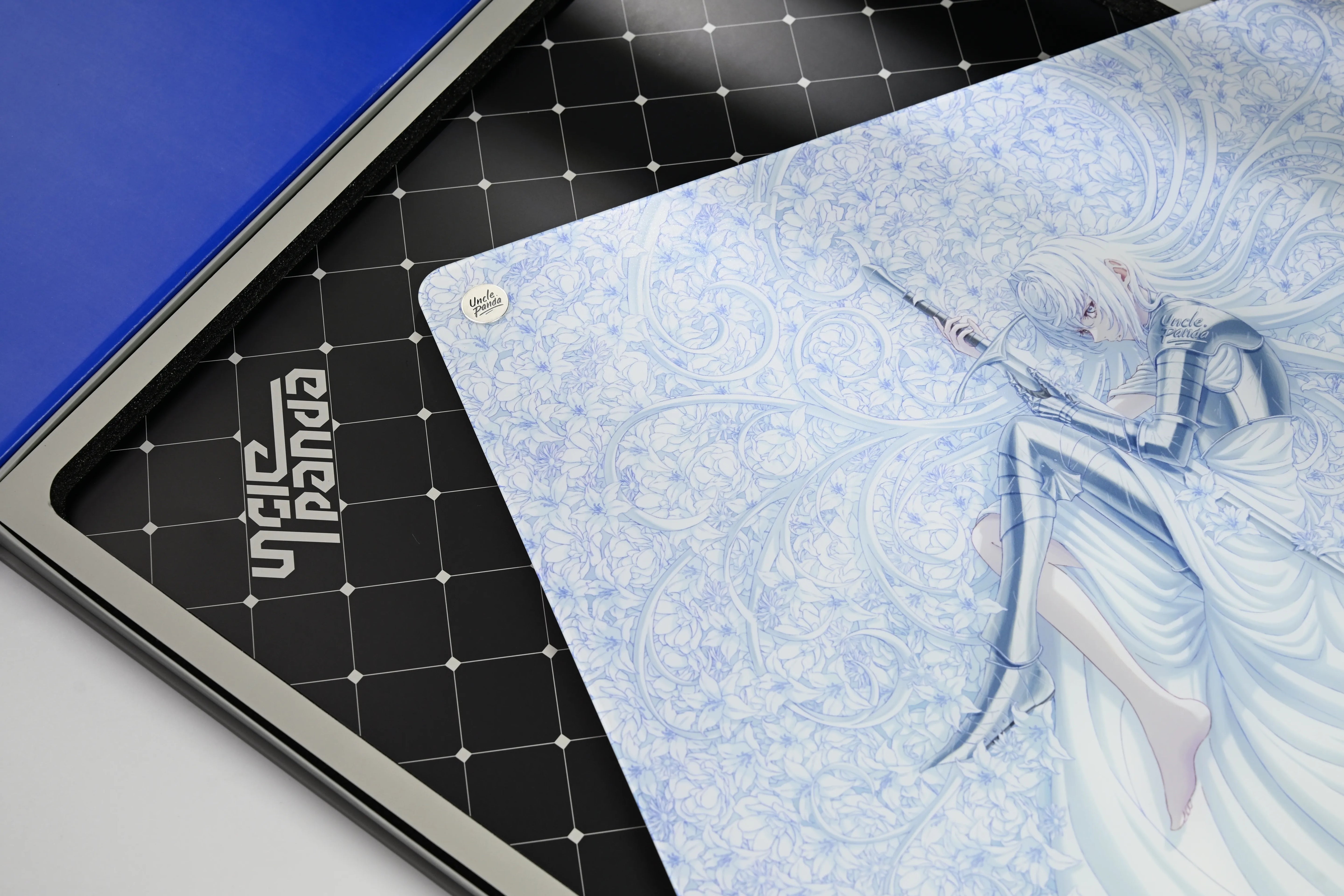
Quick answer: Most coated glass mousepads are speed pads — the coating gives the surface a smoother, faster glide. Uncoated glasspads lean control — the surface is finished with a micro-etching process that adds friction. Coated pads feel more polished out of the box; uncoated pads last longer because there's no coating to wear off. The easiest way to tell them apart is a drop of water: it stays as a single bead on coated, and it splits or spreads out on uncoated.
This guide covers how coated and uncoated glasspads differ, how to test which one you actually have, the caveats before you buy one, and the accessories you need to run a glass mousepad properly.
Coated vs uncoated: the core difference
Both are glass, but the top surface is finished differently, and that changes almost everything about how they feel.
- Coated glass mousepad. A thin surface coating is applied on top of the glass. The result is a smoother, faster glide. Most coated glasspads are speed pads.
- Uncoated glass mousepad. Raw glass, but the surface is treated with a micro-etching process that introduces controlled friction. These lean toward control.
Quick side-by-side:
| Coated | Uncoated (micro-etched) | |
|---|---|---|
| Feel | Smoother, more "polished" | More textured, more grip |
| Type | Speed-leaning | Control-leaning |
| Durability | Coating wears off over time | No coating to wear off |
| Consistency over time | Glide speed drifts as coating wears | Stable, provided the surface is kept clean |
How to tell if your glass mousepad is coated (the water test)
Most manufacturers don't say on the product page whether a glass pad is coated or uncoated. Easy test at home:
- Drop a single bead of water onto the surface of the pad.
- Watch what happens:
- Water stays as a round droplet that beads up → coated.
- Water spreads out or splits into smaller drops → uncoated.

The coating is hydrophobic, so water beads on it. Raw micro-etched glass doesn't repel water the same way, so the droplet loses its shape and spreads.
Which lasts longer?
- Uncoated is more durable. There's no coating to wear off, so the feel stays consistent as long as you keep the surface clean.
- Coated gradually wears down. With daily use, the coating slowly thins. As it wears, glide speed changes — usually the pad gets faster, and it becomes less consistent across the surface.
Which one should you pick?
Match the surface to how you aim. The same arm-vs-wrist logic that applies to any mousepad applies here:
- Low-sens / arm aimers → uncoated (control) is usually the better fit. You need a surface that helps you stop cleanly.
- High-sens / wrist and finger aimers → coated (speed) is usually the better fit. You need a surface that lets the mouse glide.
Full breakdown of the sensitivity logic here: Control vs Speed Mousepad: Which Should You Use for Your Sensitivity?
When a glass mousepad isn't for you
Glass pads have real caveats. A few situations where they're not the right choice:
- You have pets. Loose fur landing on the pad creates patches of weird friction under the mouse. It's worse on coated surfaces — hair sticks to the coating and shifts the feel. Uncoated handles it slightly better but still isn't ideal.
- You have a dusty desk setup. Dust settles into the micro-etched pattern on uncoated pads and dulls the control feel over time. Regular cleaning helps, but it's part of the ownership cost.
- You want a soft, plush feel. Coated pads feel smoother than uncoated, but neither will feel like a cloth pad. Glass is glass.
You need the right mouse skates (this matters)
A glass mousepad has to be paired with skates it's actually compatible with. The wrong skates make the pad loud, gritty-sounding, and they wear out fast. This is not optional if you want the pad to feel and sound the way it's supposed to.
What to look for on the skate material:
- PTFE (also called Teflon) — the standard. Reliable glide on glass.
- Hard PTFE — the most wear-resistant option, and the best long-term match for glass surfaces.
- UHMW-PE (ultra-high molecular weight polyethylene) — another common choice, softer glide feel than PTFE.
Stock skates on many cheaper mice are not glass-compatible. If you're moving from a cloth pad to a glass pad and haven't changed skates, expect grinding sound and rapid wear.
Arm sleeves: who should use one
Glass surfaces don't work well against bare skin — friction and heat build up on your forearm, and you'll feel drag on every motion. A sleeve solves that.
- Low-sens / arm aimers. Use a sleeve. Your forearm is what's on the pad, so covering the forearm stops the drag on every big swing.
- High-sens / wrist aimers. Choose a sleeve that extends down to your hand or palm. You're resting closer to the wrist, so a short sleeve leaves the actual contact area uncovered.
Thinking about a glass mousepad?
We stock coated and uncoated glasspads at Toronto KeyboardMan, along with the PTFE / UHMW-PE skates and sleeves to run them properly. Want to feel a coated vs uncoated pad before you commit? Come down to the showroom and try them side by side. Free North America shipping over $179 CAD.
Shop glass mousepads (Pulsar Superglide, Lunar, Uncle Panda & more) →
FAQ
What's the difference between a coated and uncoated glass mousepad?
Coated glasspads have a thin surface coating that makes the glide smoother and faster — they lean speed. Uncoated glasspads use a micro-etched surface that adds friction — they lean control. Coated pads feel more polished; uncoated pads last longer because there's nothing to wear off.
How do I test if my glass mousepad is coated?
Drop a bead of water on the surface. If it beads up as a single droplet, the pad is coated. If it spreads or splits into smaller droplets, it's uncoated.
Do glass mousepads wear out?
Coated glasspads gradually lose their coating with daily use, and the feel changes — usually getting faster and less consistent. Uncoated glasspads don't have a coating to wear off, so they hold their feel much longer as long as you keep the micro-etched surface clean.
Coated or uncoated glass mousepad — which is better?
Neither is universally better. Coated (speed) suits high-sens wrist and finger aimers. Uncoated (control) suits low-sens arm aimers. Pick the one that matches how you aim.
Do I need special mouse skates for a glass mousepad?
Yes. Glass pads need PTFE or UHMW-PE skates. Hard PTFE is the most wear-resistant option. Running stock skates from cheaper mice on a glass pad will cause a gritty sliding sound and fast skate wear.
Are glass mousepads good for people with pets?
Not the best fit. Loose fur on a coated pad creates patches of inconsistent friction under the mouse. Uncoated is slightly better but still not ideal in a pet household.
Do I need an arm sleeve for a glass mousepad?
Bare skin drags on a glass surface and gets warm. An arm sleeve fixes this. Arm aimers should wear one over the forearm. Wrist aimers should choose a longer sleeve that reaches the hand or palm, since the contact area is closer to the wrist.
Related reading: Control vs Speed Mousepad: Which Should You Use for Your Sensitivity?
Not sure if a glass mousepad is the right call for your setup? Send us your sensitivity and desk setup and we'll tell you straight.
— KeyboardMan, from the bench in Toronto
Share:
Control vs Speed Mousepad: Which Should You Use for Your Sensitivity?